Chowder Made Me Love Clams. Miso Soup Taught Me to Taste Them.
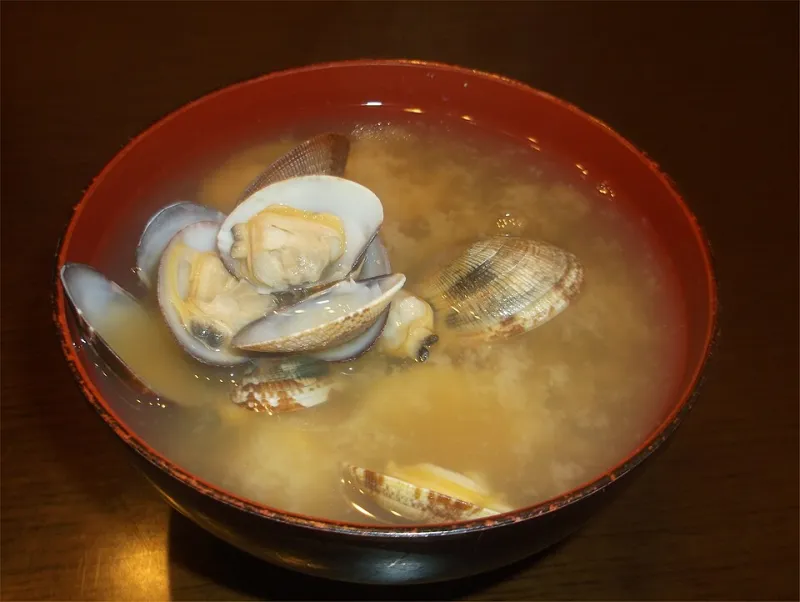
Photo: Kentin, CC BY-SA 3.0, via Wikimedia Commons
I learned to love clams in a bowl of chowder, and I'm not going to pretend otherwise. Cream, bacon, potato, a blizzard of oyster crackers — there's a reason the stuff shows up on every menu from Portland, Maine to Portland, Oregon. It's a generous bowl. It's also, if we're being honest, a bowl that's mostly about the cream, the pork, and the starch, with the clam riding along as a supporting player.
Which is fine, until you get a bag of really good clams and want to know what they taste like.
That's the turn I want to make here. Not chowder's a villain — chowder is a friend — but that Japanese asari miso soup deserves a regular slot in American kitchens, especially for people who already buy clams and already like them. It is faster, lighter, brinier, and it puts the shellfish front and center instead of burying it under a quart of dairy.
Two bowls, two clocks
Start with time, because that's the honest difference. A proper chowder is a project: render the bacon, sweat the onion, build the roux, add the potatoes, simmer until they yield, then fold in the clams at the very end so they don't turn to pencil erasers. Forty-five minutes minimum, usually an hour, and a sink full of pots.
Asari miso soup is a twelve-minute operation, and most of that is waiting for water to heat. You warm dashi, you drop in scrubbed clams, you wait for them to pop open — three to four minutes, generally — you turn off the heat, you whisk in miso, you eat. One pot. One ladle. No roux to burn, no cream to curdle.
That's not a knock on chowder. It's an observation about Tuesdays. Chowder is a Saturday bowl. Miso soup is a bowl you can make after a day that has already asked a lot of you.
The ratio I actually use
I have made this soup enough times that the numbers have stopped being a recipe and started being a habit. Here's the habit, scaled for two generous bowls:
- 2 cups dashi — homemade if you've got kombu and katsuobushi, instant granules if you don't. I keep a jar of the granules for exactly this purpose and feel no shame about it.
- 1/2 pound asari — small Manila clams are the closest thing most US fish counters carry, and they're the right size: sweet, quick-opening, and cheap enough to buy on a whim.
- 1 to 1 1/2 tablespoons miso — start at one, taste, add more. Which miso matters less than people think. White shiro miso gives you a softer, sweeter bowl; red aka miso pushes it saltier and deeper. A 50/50 blend is my default because I like both things at once.
- Aromatics to taste — a few slices of scallion, a strip of kombu if you're building dashi from scratch, maybe a tablespoon of dried wakame.
Two rules matter more than the numbers. First, purging: give the clams 20 to 30 minutes in cool salted water before they hit the pot. Second, and this is the one people get wrong, do not boil the miso. Once the clams are open, kill the heat, dissolve the miso in a ladleful of hot broth, and stir it back in. Boiling flattens the aroma and makes the soup taste like a salt lick instead of a soup.
Where the flavor actually hides
Here's the part that makes this soup feel less like a compromise and more like an upgrade: the liquor. Clams release a startling amount of briny, faintly sweet liquid as they open, and in miso soup that liquid is the broth. Nothing dilutes it. No cream rounds off the edges. You get the ocean, the fermented soy, and the dashi all stacked in the same spoonful.
Compare that to chowder, where the clam liquor is usually thrown out with the steaming water or, at best, strained in and then smothered in dairy. Both approaches are legitimate. Only one of them lets you taste the tide flat.
There's also the texture argument, and it's a real one. Clams that spend an hour in a chowder get chewy. Clams that spend four minutes in dashi stay plump and tender, and if you overshoot, you know immediately and can adjust next time. The soup is unforgiving in a useful way — it teaches you what a properly cooked clam feels like.
Toppings that earn their spot
This is where the bowl stops being a formula and starts being yours. Miso soup is a template, and clams take to almost anything you'd put on them:
- Scallion, sliced thin on the bias, always. Raw, added at the end.
- Shichimi togarashi for a warm buzz that doesn't overwhelm the broth.
- A sliver of yuzu or lemon peel — just the zest, no pith — if you want the bowl to taste like it's been outside.
- A knob of butter dropped in at the table. This is a Hokkaido move and it will strike chowder lovers as the obvious bridge between the two bowls. It is.
- Mitsuba or celery leaf if you have it, parsley if you don't. Don't overthink the herb.
- Aburaage — a small piece of fried tofu pouch, sliced — turns it into something closer to a meal.
A bowl of rice on the side, or dumped in at the end, is not cheating. It's how a lot of Japanese home cooks turn miso soup into dinner.
What chowder taught me that I kept
I still make chowder, and I still think the bacon is doing some of the best work in it. But the soup changed how I shop. I no longer buy clams only when I've planned a big production. I buy a pound when they look good, make two bowls of miso soup, and freeze whatever broth is left over. The clams go in fast, the flavor is high, and the whole thing feels less like an event and more like a habit.
That's the case, really. Chowder is a destination. Miso soup is a Tuesday. Most of us have a lot more Tuesdays than destinations.