The Case for a Clam Course Between the Roast and the Pie

Photo: Hill, Janet McKenzie, 1852-1933, ed; Boston Cooking School (Boston, Mass.), No restrictions, via Wikimedia Commons
Every November I watch the same thing happen to the American holiday table: the bird arrives, the sides fan out, and somewhere around the fourth casserole everyone quietly stops tasting. It's not a knock on anybody's cooking. It's that a big feast needs one bright, saline, slightly surprising thing to cut through the butter.
On the coast of Japan, that thing is almost always shellfish.
Why clams make sense at a feast
Think about what a clam does to a table. It's rich, but it's rich in a clean way — the flavor is savory and oceanic rather than fatty. It's festive without being expensive; a few pounds feed six people generously. And it comes with a built-in ceremony. The shells are the serving vessel. Nobody has to be told it's a special-occasion dish.
In Japanese coastal communities, that instinct runs deep. Hamaguri — the hard clam — arrives in a clear soup at weddings, chosen because a matched pair of shells is a tidy metaphor for a good marriage. Along the Sanriku coast and around the Ariake Sea, winter shellfish seasons are a reason to gather, and miso-butter clams show up on the table the way a green bean casserole shows up here: unremarkable in the best way, always present. In American home kitchens, where Japanese pantry staples now share shelf space with canned cranberry sauce, that tradition translates without much friction at all.
The bridge ingredient is miso butter. It's the kind of thing that sounds like a restaurant flourish and then turns out to be four ingredients stirred in a bowl.
The gratin, in brief
My version steams the clams in sake, folds them into a miso-spiked cream with leeks, piles it into a buttered dish, and covers the whole thing in panko and Parmesan. Under the broiler it goes bronzed and crackling, and the smell — miso, butter, shellfish, toasted breadcrumb — genuinely stops conversation.
It's not a traditional Japanese dish, and it's not a traditional American one. It's a third thing, which is exactly why it's good on a holiday table that's already crowded with tradition.
Shopping note for US markets
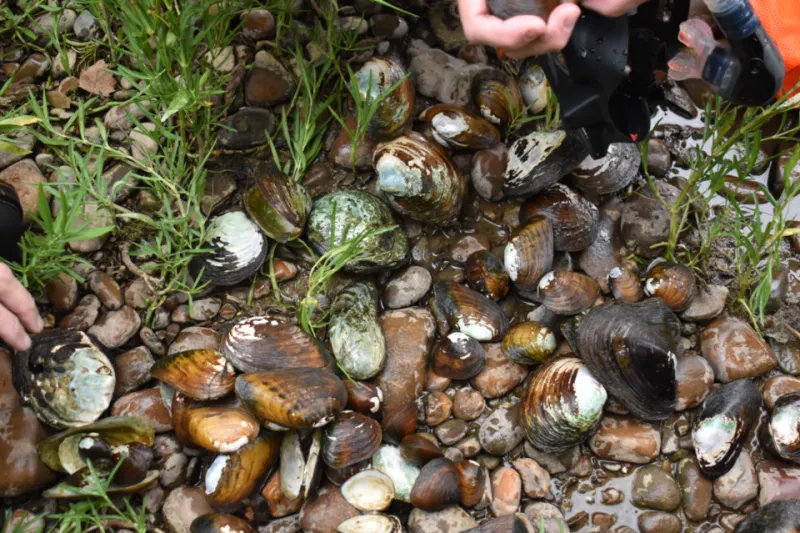
What to buy: Pacific Manila clams (labeled simply "Manila clams" or, confusingly, "littlenecks" on the West Coast) or East Coast littlenecks. Both are sweet, meaty enough to hold up to cream, and widely available. Figure about 1 pound per person in the shell, or 3 1/2 pounds for six people as a course that's part of a larger meal.
How they're labeled: "Littleneck" means different clams on different coasts. On the East Coast it's a size grade of the hard clam. In the Pacific Northwest it's often used for Manilas. If the tag lists Washington, British Columbia, or California as the origin, you're almost certainly holding Manilas. Buy those.
Freshness check: shells closed, or closing when you tap them. A faint sea smell, not an ammonia one. Ask the fish counter when they came in — a good counter will know.
Miso: white (shiro) miso is what you want. It's mellow and slightly sweet and won't dominate. Red miso works, but use less; it's a bossier flavor and it'll fight the cream.
Panko: the coarse Japanese breadcrumb, sold in every supermarket now. Don't substitute regular breadcrumbs without a pause — panko's shaggy texture is what makes the crust shatter instead of slump.
Miso-Butter Clam Gratin
Serves 6 as a holiday course
Ingredients
- 3 1/2 lb Manila clams or East Coast littlenecks, scrubbed
- 1/2 cup dry sake or dry white wine
- 4 tbsp unsalted butter, softened, divided, plus more for the dish
- 2 tbsp white miso
- 1 tsp mirin
- 1 medium leek, white and light green parts, halved and sliced thin
- 2 cloves garlic, minced
- 1 tbsp all-purpose flour
- 3/4 cup heavy cream
- 2 tbsp chopped flat-leaf parsley
- 1 cup panko
- 1/3 cup finely grated Parmesan
- Zest of half a lemon
Method
- Steam the clams. Bring the sake to a boil in a wide pot with a lid, add the clams, cover, and cook 4 to 6 minutes, shaking the pot once or twice, until they open. Pull them out as they open and set aside. Strain the pot liquid through a fine sieve lined with a paper towel; you should have about 1/2 cup. Discard any clam that stays shut.
- Make the miso butter. Mash 2 tablespoons of the softened butter with the miso and mirin until smooth. Set aside.
- Build the base. Wipe out the pot, melt the remaining 2 tablespoons butter over medium heat, and cook the leek with a pinch of salt for 5 minutes until soft and sweet. Add the garlic and stir for 30 seconds. Sprinkle in the flour and stir until it disappears, about a minute.
- Finish the sauce. Whisk in the reserved clam liquid and the cream. Simmer gently for 3 to 4 minutes until it thickens enough to coat a spoon. Off the heat, whisk in the miso butter and the parsley. Taste — it should be savory and a touch briny, not salty.
- Assemble. Heat the broiler to high with a rack about 8 inches below. Butter a 2-quart gratin dish. Spread a third of the sauce in the bottom, arrange the clams in a single layer, and spoon the rest of the sauce over them. Toss the panko with the Parmesan, the lemon zest, and a drizzle of melted butter, then scatter it evenly over the top.
- Broil. 3 to 5 minutes, until the crumbs are deep golden and the sauce bubbles up around the edges. Watch it — panko goes from pale to burnt faster than you'd believe.
The make-ahead plan
This is a holiday dish that behaves well under pressure, which is the whole point.
Up to two days ahead: steam the clams, strain the liquid, and make the sauce. Store the clams in their shells and the sauce separately, both covered, in the fridge.
Morning of: assemble the gratin in the buttered dish, cover, and refrigerate. Keep the panko topping in a separate container — it will go soggy if it sits on the sauce overnight.
Before serving: add 12 to 15 minutes in a 375°F oven to heat through, then top with the crumbs and broil. Total oven time stays short, which matters on a day when the oven is booked solid.
Two small variations
Swap half the leek for thinly sliced fennel and the licorice note plays nicely against the miso. Or add a cup of halved cherry tomatoes under the crumbs for a sharper, more acidic version that's better with ham than with turkey.
Serve it in the middle of the table, with bread for the sauce and a bowl for the shells. Somebody will ask what's in it. Tell them miso butter, and watch them write it down.